How to Clean Leather Designer Bags: Practical Care for Longevity
Care Advisory: This guide provides general information about luxury leather care based on industry best practices and material science principles. Results may vary depending on leather type, age, and condition. Always test products on inconspicuous areas first. For valuable pieces, consider professional cleaning services. Luruge is not responsible for damage resulting from following these guidelines. Resale value depends on many factors beyond cleaning and cannot be guaranteed.
Quick Answer: Use a microfiber cloth with pH-neutral leather cleaner for weekly maintenance, condition monthly with appropriate products, and store stuffed in breathable dust bags. Proper care helps maintain leather condition over time compared to neglected pieces.
The 2026 Perspective: Character vs. Over-Restoration
The secondary market has evolved in its assessment of leather condition.
Collectors increasingly ask not “Does it look new?” but “Does it look authentic?”
According to resale platform observations, bags that appear completely untouched after years of claimed ownership can raise authentication questions. Natural, even aging—hydrated fibers, maintained seams, hardware with appropriate patina—signals genuine use.
You can often sense quality maintenance immediately:
- The suppleness of well-conditioned full-grain leather
- The smooth operation of maintained hardware
- Appropriate weight and mechanical feel
- The characteristic earthy scent of quality leather rather than chemical treatments
Contemporary cleaning philosophy emphasizes preserving authentic character rather than achieving like-new appearance.
Why Cleaning Matters for Long-Term Condition
Industry observations suggest maintenance directly affects long-term leather performance.
Resale platforms evaluate condition through multiple factors:
- Leather hydration and flexibility
- Surface integrity
- Hardware condition and consistency
Material science perspective: Damage often begins not with visible scratches but with internal dehydration. As moisture content drops, micro-cracking can develop. This progresses to visible creasing that significantly affects appearance and flexibility.
Properly maintained leather retains flexibility—it folds rather than fractures. Under angled light, the surface shows depth and dimension rather than flat dullness.
This is why material quality matters. Full-grain leathers possess cellular structure that responds well to repeated care cycles without degrading.
Understanding Leather Hydration
Leather consists of protein fiber networks. Durability depends on maintaining appropriate internal moisture balance.
Industry standard: Professional leather conservators aim to maintain approximately 12-15% moisture content to prevent brittleness while avoiding over-saturation that can distort grain structure.
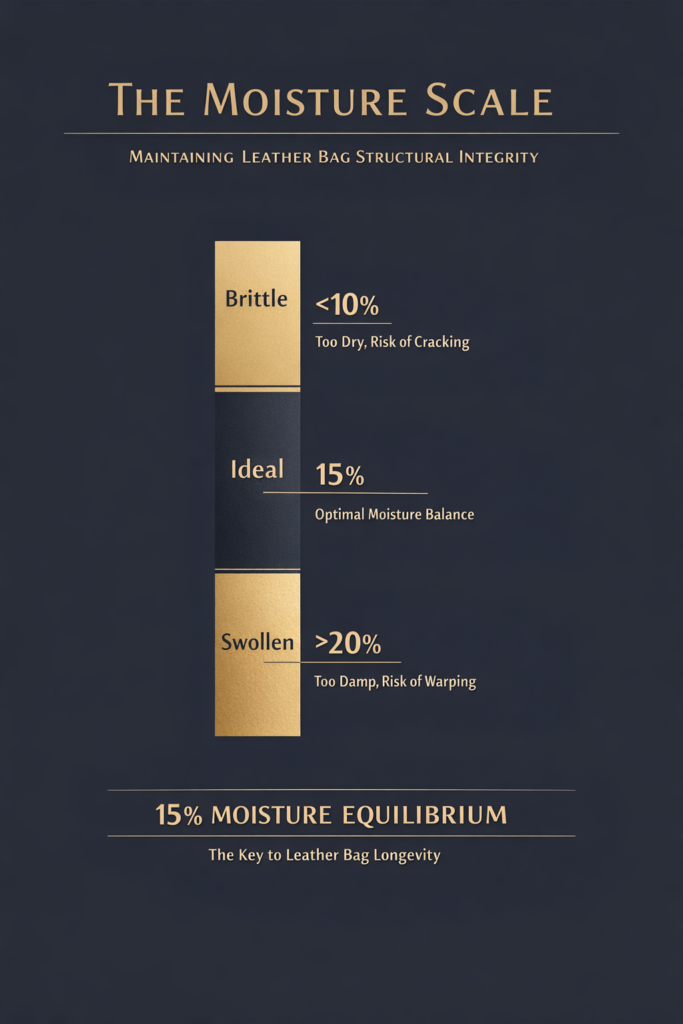
Both extremes affect leather performance. Proper hydration maintains the structure over extended periods.
Quality full-grain hides retain their natural fiber architecture, allowing them to respond well to conditioning rather than degrading with each treatment.
Step-by-Step: How to Clean a Leather Bag
1. Begin With Dry Dust Removal
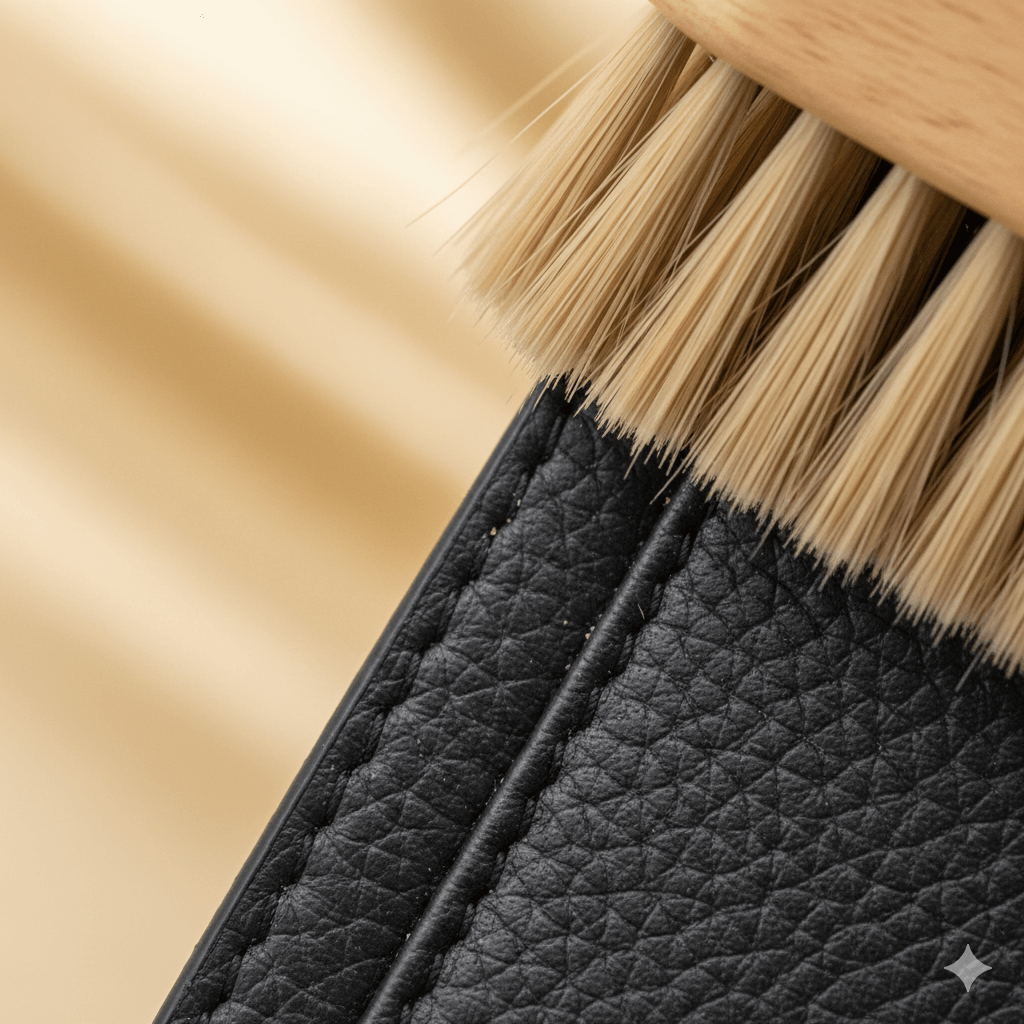
Never introduce liquid before removing surface debris.
Grit becomes abrasive when moisture is applied.
Use a soft horsehair brush or microfiber cloth. Focus on:
- Seam edges
- Areas under hardware
- Base corners
Well-maintained leather typically produces a soft, subtle sound during brushing. Absence of this can indicate oils have been depleted.
2. Spot Clean With pH-Balanced Solution
Apply cleaner to cloth, never directly to leather. Use circular motions with light pressure.
The objective is lifting surface contaminants without saturating fibers.
Watch the surface appearance as you work. Proper cleaning creates a soft, matte finish. Excessive gloss indicates too much product has been applied.
Quality leathers respond best to appropriate cleaning products.
3. Condition While Leather is Slightly Damp
This timing is often overlooked.
Leather conditioner bonds most effectively when residual moisture remains in the fibers.
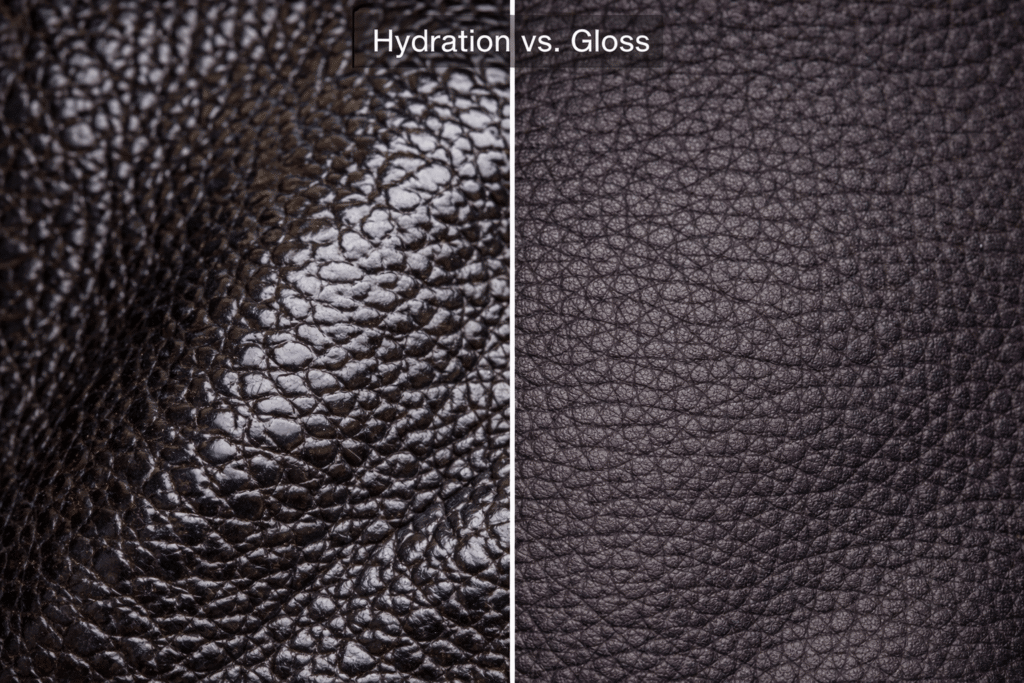
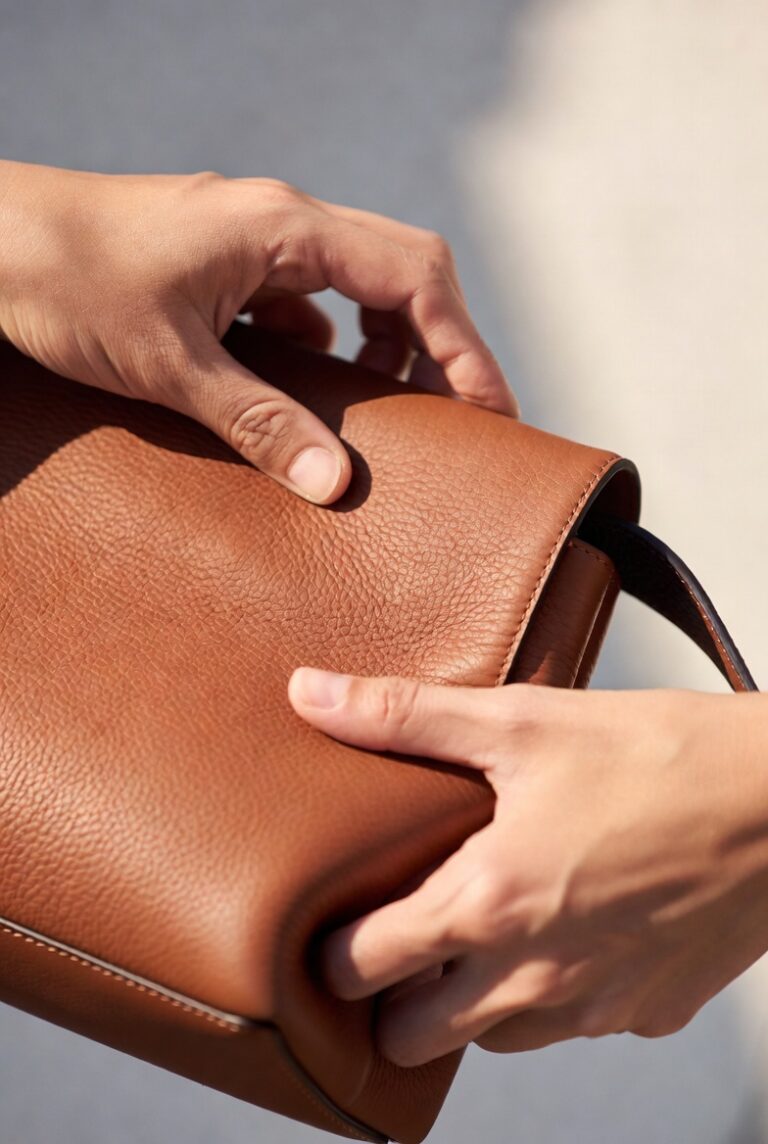
Massage lightly using fingertips. The surface should feel supple, not slick or greasy. If it feels like you’re rubbing lotion on plastic, the product may be inappropriate for the leather type.
Important: Silicone-based conditioners can create short-term shine while potentially affecting leather structure long-term. Residue-free formulations designed for luxury leather are preferable.
4. Air Rest for 24 Hours
Heat can distort grain structure. Always allow leather to dry naturally at room temperature.
Set the bag upright to maintain its natural silhouette during drying.
Material Quality and Care Response
Material characteristics significantly affect how leather responds to care.
Our curation philosophy: We prioritize leathers that demonstrate resilience through repeated use and maintenance cycles. Full-grain construction tends to show superior long-term performance compared to heavily treated or corrected surfaces.
Industry observations: Contemporary luxury increasingly emphasizes construction quality over prominent branding. This “ghost branding” trend seen across recent runway shows aligns with valuing material performance over logo visibility.
Quality leather should age with character, not fragility.
Care Approach Comparison
| Factor | Surface-Level Approach | Maintenance-Focused Approach |
|---|---|---|
| Goal | Cosmetic appearance | Material longevity |
| Frequency | Very frequent | Strategic, as needed |
| Products | Various, often fragrance-heavy | pH-balanced, minimal additives |
| Conditioning | Heavy surface application | Appropriate hydration |
| Hardware | Polished to high shine | Natural patina preserved |
| Long-term Effect | May mask condition issues | Maintains authentic character |
Quality materials consistently perform better under appropriate maintenance rather than aggressive treatment.
Hardware Care Considerations
Resale specialists often examine hardware closely during authentication.
Quality indicators:
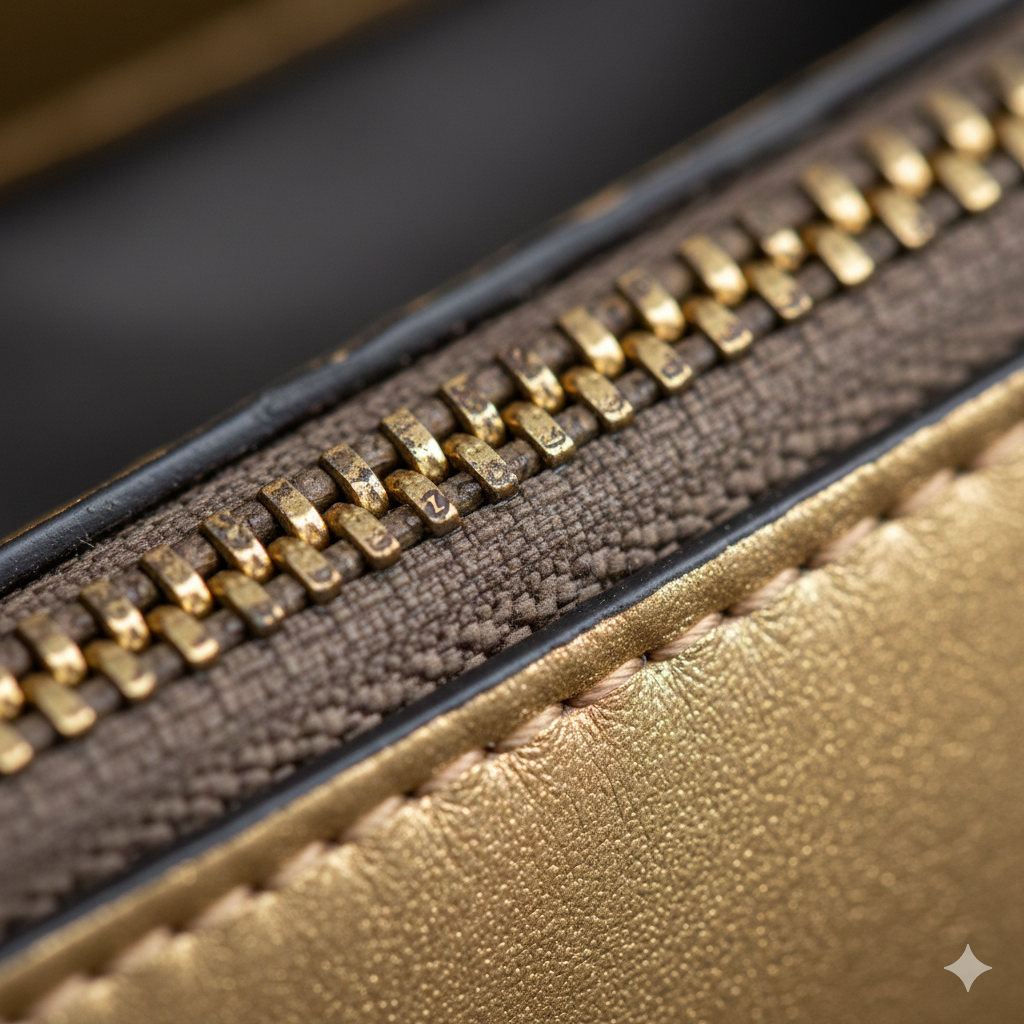
- Solid brass carries appropriate weight and develops muted patina over time
- Lower-quality alloys may show brightness loss or flaking
- Hardware should operate smoothly with appropriate mechanical feel
Care approach: Cleaning should respect natural aging. Oxidation tells an authentication story. Aggressive polishing to mirror-finish can remove the very characteristics that indicate authenticity.
Who This Guide Serves
This care framework suits:
- Owners treating bags as long-term pieces (5-10+ years)
- Collectors who rotate seasonally
- Buyers focused on maintaining condition
Less applicable for:
- Very frequent replacement cycles
- Long-term storage without use
- Pieces already showing significant structural damage
Reality check: If leather already shows deep cracking or severe warping, professional restoration may be needed. Prevention through proper care is far more effective than attempting to reverse significant damage.
The Sensory Factor in Quality Assessment
Quality vegetable-tanned leather carries a characteristic warm, slightly earthy aroma.
Heavy chemical treatments smell sharp or synthetic.
Cleaning should not completely eliminate natural scent. When it does, natural oils may have been stripped too aggressively. The subtle leather scent serves as one indicator of material authenticity and appropriate treatment.
Quality leathers maintain their characteristic aroma even after multiple appropriate cleaning cycles.
Storage as Care Extension
Proper cleaning can be undermined by poor storage.
Recommended practices:
- Breathable dust bags (avoid plastic)
- Structured inserts to maintain shape
- Moderate humidity environments
- Avoid extreme temperatures
Testing stored leather: Press gently. It should offer soft resistance. Rigidity can indicate dehydration; excessive softness may suggest over-conditioning.
Common Care Mistakes
Practices that can reduce condition:
- Over-conditioning causing fiber saturation
- Alcohol-based wipes leading to discoloration
- Heat drying distorting grain structure
- Excessive hardware polishing removing natural patina
- Neglecting interior maintenance
Interior consideration: Interior condition significantly affects overall assessment. Oil transfer, staining, and odor impact condition grading substantially.
The Long-Term Value Perspective
Proper care extends usable lifespan significantly—industry observations suggest 8-10+ years of maintained appearance versus accelerated deterioration with neglect.
Market observations: Bags showing appropriate wear patterns with good structural condition often attract serious buyers because authentication concerns decrease. Evidence of proper stewardship communicates care and increases buyer confidence.
Contemporary maintenance is less about achieving pristine appearance and more about demonstrating thoughtful ownership.
Care as Stewardship
Quality leather evolves through use.
Natural aging includes:
- Oil redistribution
- Fiber settling
- Hardware tone development
These changes reflect genuine ownership rather than decline—they tell the story of a carried bag, not a stored artifact.
Properly maintained pieces communicate discernment. Informed buyers recognize this distinction quickly.
Our Curation Approach
At Luruge, we prioritize pieces engineered for longevity:
- Materials selected for resilience
- Hardware chosen for stability
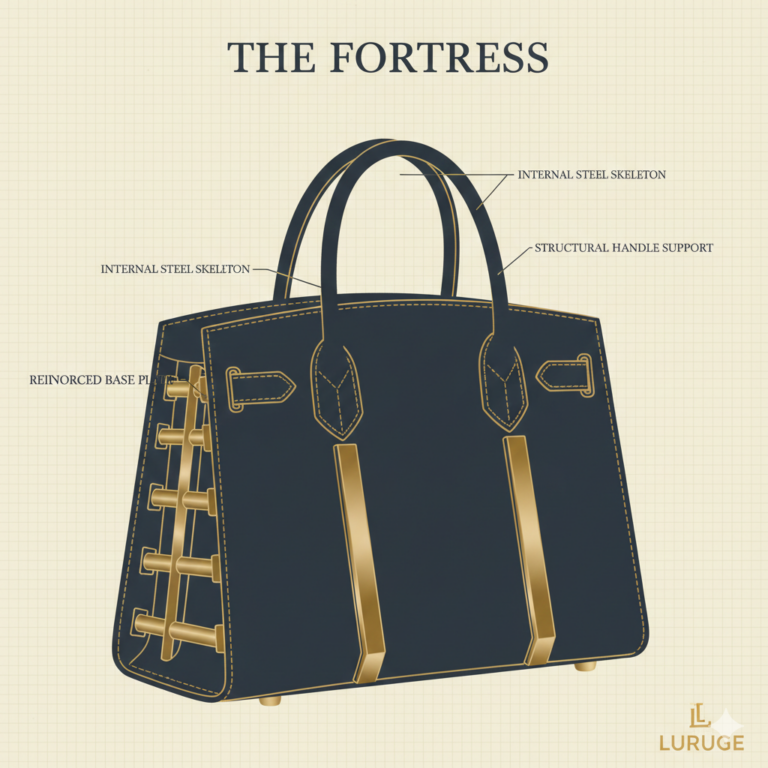
- Silhouettes designed for structural integrity through use
These represent bags designed to develop character gracefully rather than deteriorate rapidly with normal use.
Our perspective: A properly maintained bag should show intelligent use, not overly cautious preservation. That distinction increasingly defines how informed collectors assess quality and authenticity.
Explore Quality Materials
Our curated collection emphasizes leathers that respond well to appropriate care and develop authentic character through use.
About This Guide
The Luruge Editorial Team creates care guidance based on industry best practices, material science principles, and consultation with leather care specialists. This guide provides general information; individual results vary based on leather type, age, and condition. Updated February 2026.
Important Disclaimer
At Luruge, we source from BrandsGateway, a verified wholesale luxury distributor. While we provide care guidance based on industry research, we are not professional leather conservators. For valuable or delicate pieces, we recommend consulting professional leather care services. We cannot guarantee specific outcomes or resale values based on following these guidelines. Individual experiences will vary.
Post Tags: #Leather Care Guide #Designer Bag Maintenance #Luxury Bag Cleaning #Material Preservation #Proper Leather Storage