
How to Assess Leather Quality: A Practical Guide
Editorial Note: This guide provides general educational information about leather characteristics based on industry knowledge and material science principles. Leather quality assessment involves subjective judgment and varies by individual preference, intended use, and leather type. We do not perform independent laboratory testing. For high-value purchases, consider consulting leather specialists or requesting material specifications from retailers. Individual experiences may vary.
You’re standing in a boutique—or scrolling late at night—considering a handbag that looks beautiful.
The leather appears smooth. The color is rich. The price tag suggests quality. Yet a question lingers:
Is this actually well-made leather… or just effective presentation?
This moment is familiar to anyone who values craftsmanship. Because in today’s market, many products are designed to appear premium at first glance, while material choices may vary significantly.
Here’s the practical reality:
With a few observational checks—ones you can perform quickly—you can better assess whether a bag uses quality materials or relies primarily on surface treatment and finishing.
This guide will show you what to look for.
No intimidation. No jargon. Just clear, tangible characteristics that inform purchasing decisions.
The Surface Assessment
What Touch Reveals
One of the most immediate indicators of leather quality is tactile response.
Before considering branding or hardware, leather communicates through feel.
Characteristics often associated with quality leather:
Supple texture with natural give
- Warmth to touch (leather absorbs body heat)
- Soft with underlying structure
- Subtle grain variation
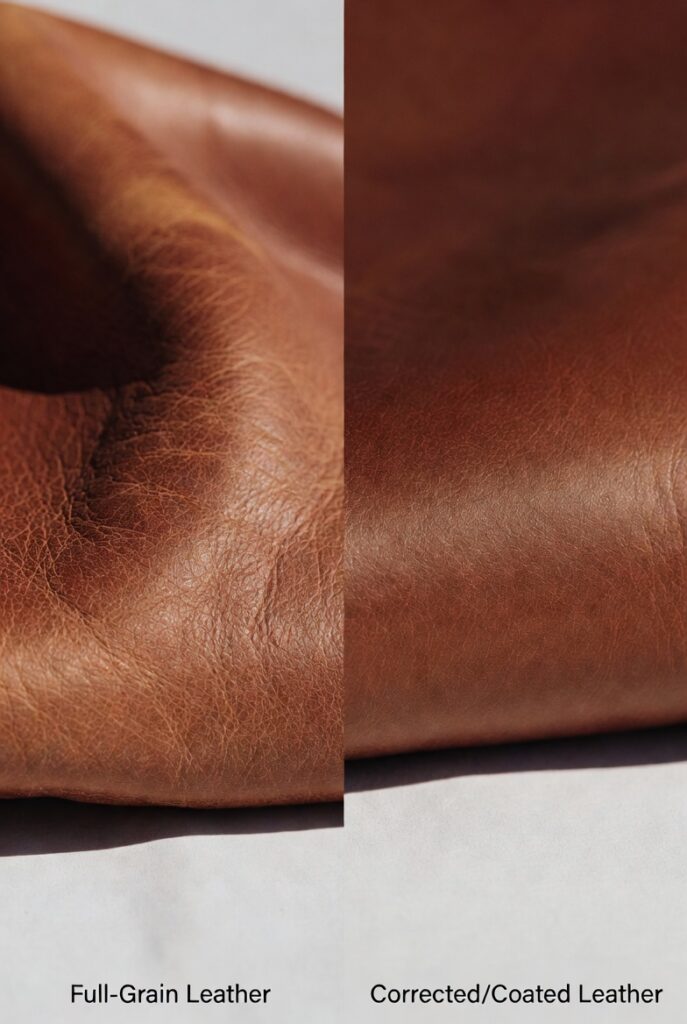
When you run your fingers across it, the surface typically doesn’t feel heavily sealed. There’s a sense of material depth.
This occurs because premium leather—particularly full-grain—retains more of the hide’s natural characteristics rather than extensive surface processing.
Understanding Heavily Processed Surfaces
Many commercial handbags use corrected grain or coated leathers—sometimes leather splits layered with synthetic finishes. These are engineered for visual uniformity under retail lighting.
Common characteristics:
- Very smooth, uniform texture
- Minimal tactile variation
- Slightly rigid feel
- Glossy or plasticky surface
If the surface feels identical across all areas—no natural texture variation—it often indicates significant processing.
General observation:
Leather heavily processed for uniformity typically prioritizes consistent appearance over natural character.
The Sensory and Movement Tests
Once you’ve assessed surface texture, additional information comes from scent and how the material responds to gentle manipulation.
The Scent Characteristic
Genuine leather has a distinctive natural scent:
- Warm and slightly earthy
- Clean but not artificial
- Never sharp or chemical
It should not smell overtly sweet, plasticky, or industrial.
Products using synthetic coatings, strong adhesives, or heavy chemical treatments may produce noticeable artificial scents—particularly when new.
If a bag smells more chemical than natural, that’s useful information.
The Flexibility Response
Gently flex a small section of the leather between your fingers.
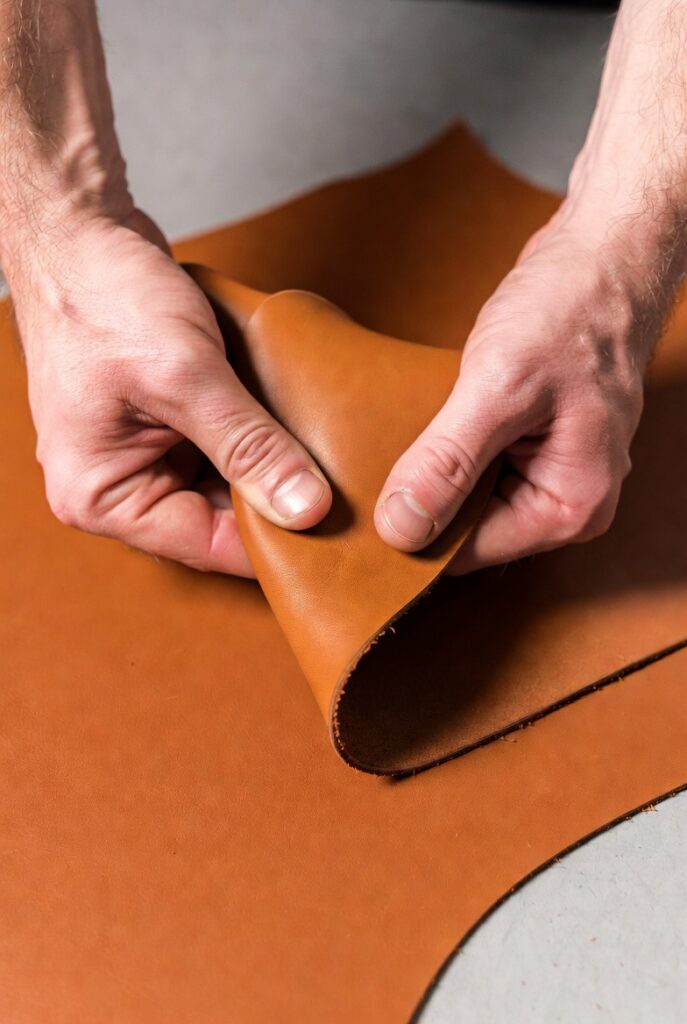
Quality leather typically:
- Bends easily without resistance
- Forms soft, natural creases
- Returns to shape when released
More heavily processed or coated materials may:
- Resist bending
- Show stiff, harsh creases
- Or exhibit cracking over time with use
This flex behavior provides insight into how the leather will age. Premium leather tends to soften and develop character. Inferior materials often simply deteriorate.
The Construction Details
If you want insight into a bag’s construction philosophy, examine the areas most buyers overlook.
Quality reveals itself in finishing details.
Edge Examination
Look at the edges of panels and straps.

In well-constructed bags, edges are often:
- Carefully folded and stitched
- Hand-burnished (polished using traditional techniques)
- Clean and purposeful in appearance
These edges feel organic and deliberate.
In contrast, some commercial production relies on:
Thick painted edge coatings—essentially synthetic sealant applied to raw cuts.
Over time, painted edges may:
- Crack or peel
- Feel rubbery or artificial
- Show wear more prominently

Stitch Quality Assessment
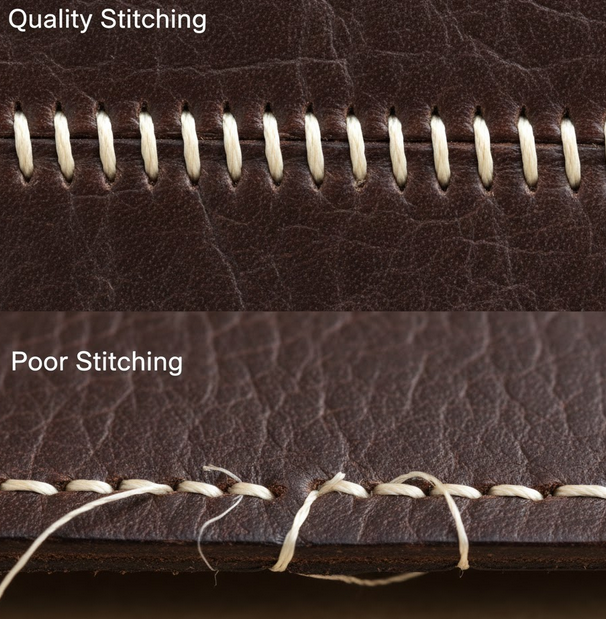
Stitching provides clear indication of construction standards.
Look for:
- Consistent spacing
- Straight alignment
- Even tension
- Quality thread (not loose or fuzzy)
Well-made bags—whether hand-stitched or precision machine-stitched—show visual consistency. Each stitch appears intentionally placed.
Uneven stitching, irregular spacing, or loose thread ends suggest rushed production or quality control issues.
The Light Reflection Observation
This final assessment is subtle but informative.
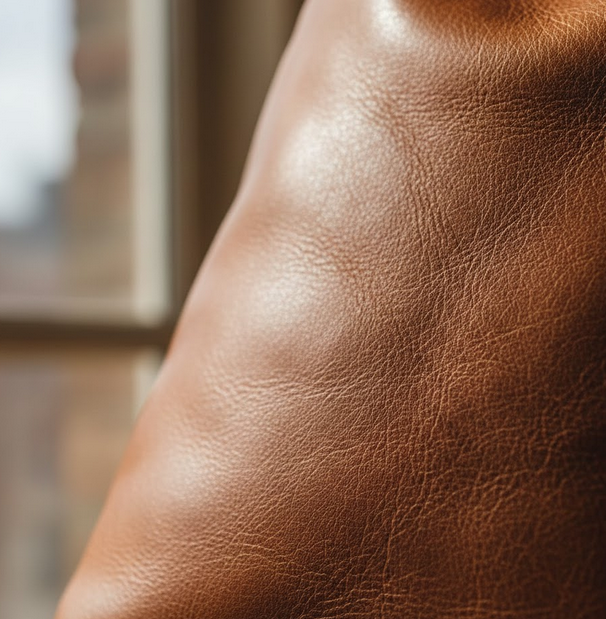
Hold the bag under natural or indirect light and observe how the leather surface responds.
What This Reveals
Genuine leather typically shows:
- Slight tonal variation across surface
- Soft highlights
- Natural light play with dimension
Synthetic materials or heavily coated surfaces often:
- Reflect light uniformly
- Appear flat or plastic-like
- Show minimal depth
This difference becomes particularly noticeable when examining a bag in varied lighting. Rotate it slowly and observe how light interacts with the surface.
The Quick Assessment Framework
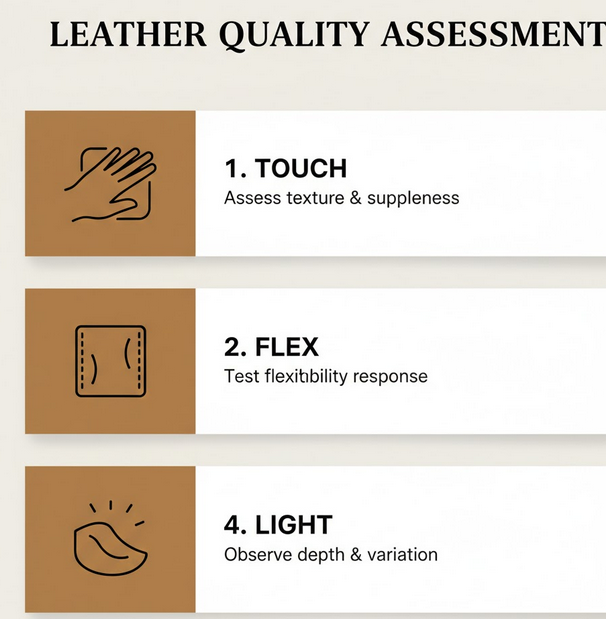
If you remember nothing else, remember this sequence:
- Touch – Assess texture and suppleness
- Flex – Test how material responds to gentle bending
- Edges – Examine finishing quality
- Light – Observe depth and tonal variation
Four observations. Less than a minute. More informed decisions.
Why Material Understanding Matters
Contemporary luxury increasingly emphasizes discernment over display.
As trends accelerate and marketing intensifies, genuinely well-made products distinguish themselves through substance rather than presentation.
They communicate through feel, construction, and material integrity—qualities that reward careful attention.
Once you understand these characteristics, purchasing decisions become clearer. You develop confidence in your own assessment rather than relying solely on brand positioning.
A Perspective on Quality and Longevity
Understanding leather characteristics isn’t just about avoiding disappointment.
It’s about recognizing why certain pieces integrate into daily life successfully—why they improve with use, why they develop individual character, why they feel personally meaningful.
Our Approach at Luruge
This philosophy guides our curation decisions—from material selection to construction evaluation.
We source from BrandsGateway, a verified wholesale luxury distributor, and prioritize pieces that demonstrate:
- Quality material characteristics
- Thoughtful construction details
- Appropriate finishing
Not because it’s flashy, but because material quality affects long-term satisfaction.
Our belief: Well-made bags don’t announce quality loudly.
They reveal it through touch, construction, and how they age with use.
Explore Materials and Construction
Our curated collection emphasizes pieces that demonstrate the material characteristics and construction details discussed in this guide—selected for substance over surface.
About This Guide
The Luruge Editorial Team creates educational content about luxury materials and construction through industry research and material science consultation. This guide provides general observation techniques; individual assessment and preferences vary. We recommend examining products in person when possible and requesting material specifications for high-value purchases. Updated February 2026.
Our Sourcing Transparency
At Luruge, we source from BrandsGateway, a verified wholesale luxury distributor with direct brand relationships. While we evaluate products based on observable characteristics and supplier specifications, we do not perform independent materials testing or laboratory analysis. We share what we look for in our curation process to help inform your own assessment approach.
Material preferences are personal. These observations represent what we prioritize in our selection process, not universal quality standards.