Saffiano — Timeless Armor or Synthetic Trap?
Editorial Note: This article provides educational content about Saffiano leather based on publicly available industry research, material science principles, and resale market data. It is not financial or investment advice. Luruge is a curated marketplace sourcing from verified wholesale suppliers. We do not perform independent materials testing or laboratory analysis. Material performance can vary based on individual use, climate, and care practices. Always research thoroughly before making luxury purchases.
In the hierarchy of luxury leathers, few materials provoke as much debate as Saffiano. To some collectors, it represents discipline, longevity, and practical ownership. To others, it is an industrial compromise—too rigid, too uniform, too far removed from the romance of natural hide.
At Luruge, where we evaluate handbags based on market data and material characteristics, Saffiano deserves clear-eyed assessment grounded in research rather than mythology or marketing claims.
The Debate Around Saffiano
Saffiano occupies a rare position: it is simultaneously dismissed by purists and embraced by practical luxury buyers.
The critique is familiar: “plastic-coated,” “synthetic-feeling,” “soulless.”
The defense is equally consistent: “indestructible,” “weatherproof,” “built for real life.”
Both perspectives hold merit. Understanding Saffiano requires understanding how it’s manufactured—and what trade-offs that construction creates.
The Technical Process: From Patent to Performance
Origins and Heritage
Saffiano leather was patented in 1913 by Mario Prada, developed not as a fashion statement but as a functional advancement. Prada sought a leather that could withstand daily handling, travel, and climate exposure without visible degradation.
More than a century later, the process remains largely unchanged—because the material characteristics still perform according to the original design intent.
How Saffiano Is Made
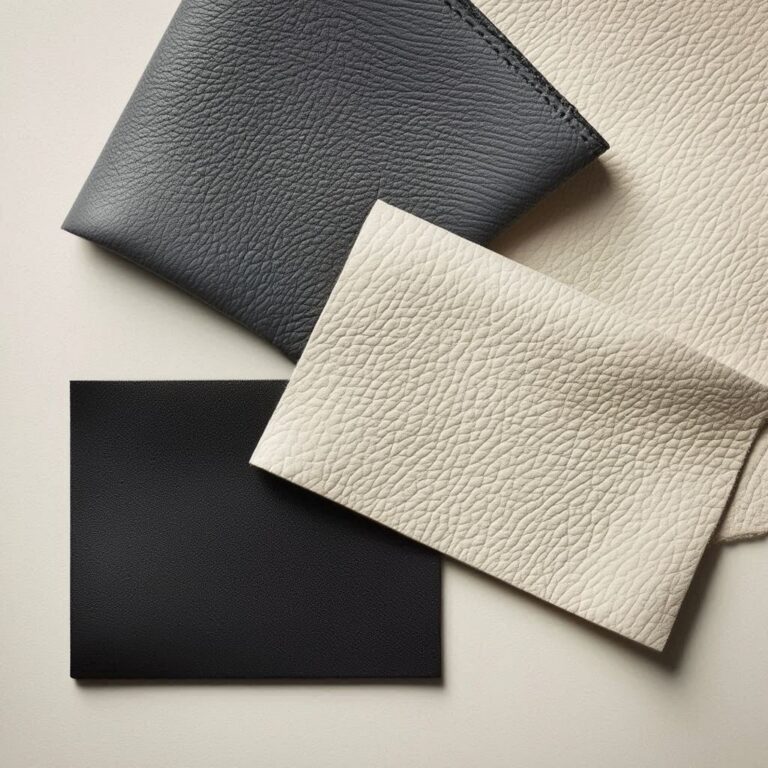
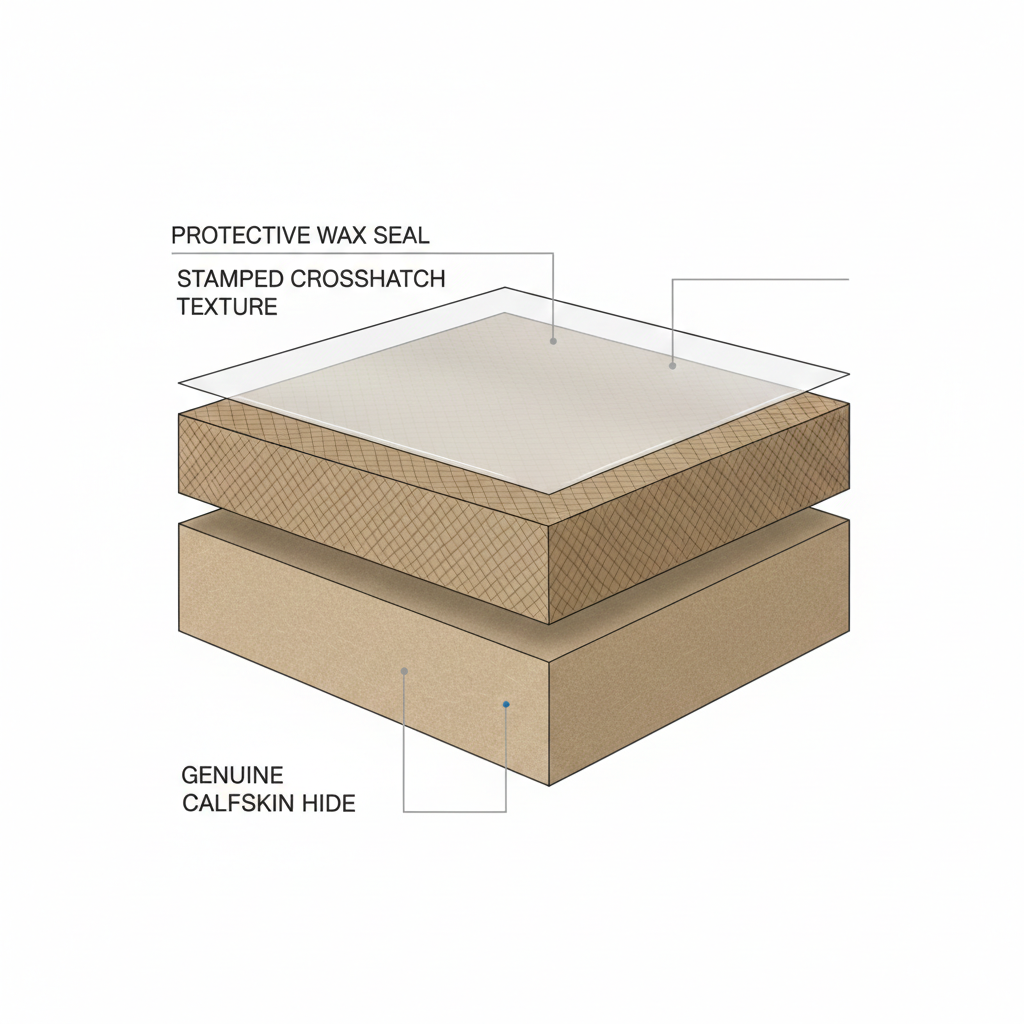
Saffiano is not a leather type. It is a treatment process, most commonly applied to genuine calfskin.
The process involves:
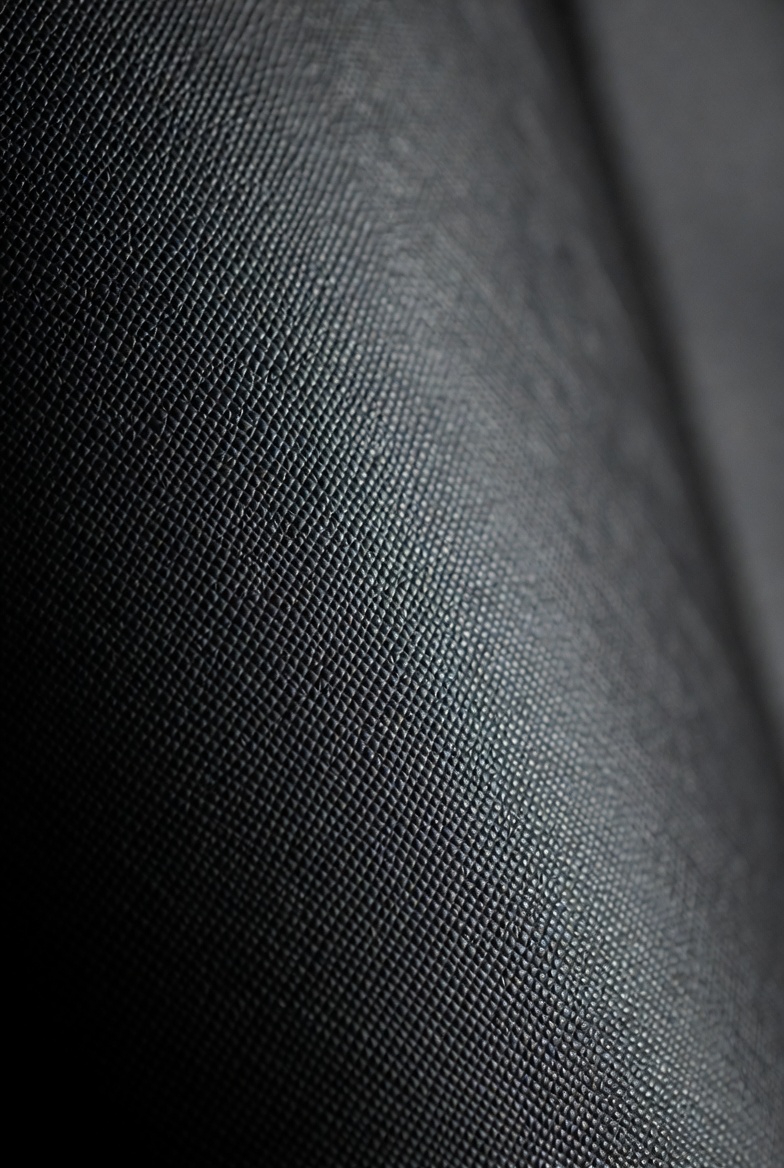
- Heat-stamping a diagonal crosshatch pattern into the leather using a steel press
- Applying a protective wax or resin finish, sealed under heat
- Fixing pigment beneath the surface, resulting in uniform color stability
Saffiano Leather Construction:
┌─────────────────────────────────────────┐
│ Top Layer: Protective Wax/Resin Seal   │
├─────────────────────────────────────────┤
│ Middle Layer: Heat-Stamped Crosshatch  │
├─────────────────────────────────────────┤
│ Base Layer: Genuine Calfskin Hide      │
└─────────────────────────────────────────┘
This layered structure explains both Saffiano’s resilience and its rigidity. The surface is sealed rather than porous—engineered for protection, not evolution.
The “Armor” Argument
Performance Characteristics
Saffiano’s reputation for durability is supported by observable material behavior:
Scratch resistance: According to leather industry research, the sealed surface layer resists minor abrasions more effectively than untreated hides. Keys, zippers, and incidental contact typically leave minimal visible impact compared to smooth leathers.
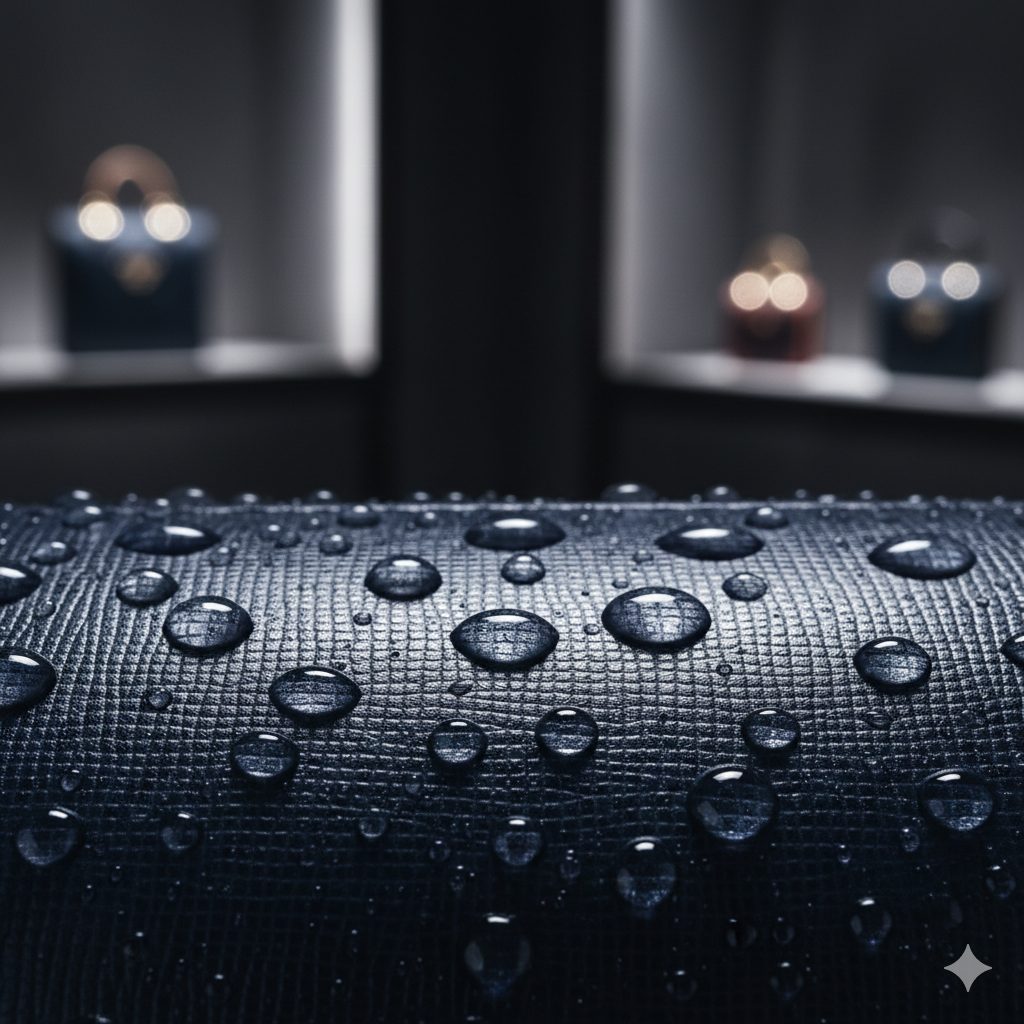
Water and humidity resistance: The sealed surface repels moisture at the molecular level. Unlike porous leathers that can darken or stiffen when wet, Saffiano’s protective layer prevents liquid absorption.
Shape retention: The stamped structure helps prevent sagging and corner collapse. Industry observations suggest that heavily loaded Saffiano bags maintain structural integrity more effectively than softer leather alternatives.
In practical terms, market data shows that Saffiano bags used regularly for extended periods often maintain higher condition grades compared to untreated leathers with similar use patterns.
Performance Comparison Matrix
| Material | Durability Characteristics | Tactile Quality | Repair Feasibility |
|---|---|---|---|
| Saffiano | High (Protective) | Structured / Rigid | Low (Challenging) |
| Pebbled Calf | Medium | Soft / Casual | Medium |
| Lambskin | Low (Delicate) | Buttery / Warm | High (Responsive) |
Saffiano excels not by developing desirable aging characteristics—but by resisting visible aging altogether.
The “Synthetic Trap” Argument
Aesthetic and Sensory Trade-Offs
Saffiano does not meaningfully soften with time. The sealed surface produces a firmness that some collectors experience as industrial, particularly in highly structured silhouettes.
It lacks:
- Natural patina development: No darkening at contact points, no grain deepening
- Grain variation over time: The crosshatch remains consistent from year one to year ten
- Tactile warmth: The resin seal creates a barrier between hand and hide
The Character Development Gap
Heritage collectors often describe luxury leather as evolving material. They expect bags to develop character through wear patterns, subtle color shifts, and surface changes.
Saffiano resists this narrative. It remains static, controlled, and largely unchanging.
This is not a manufacturing defect—it reflects the design intent. But for buyers seeking material evolution through use, Saffiano prioritizes performance over romance.
Repair Reality: The 2026 Landscape
Saffiano’s protective structure creates both advantages and constraints when damage occurs.
Traditional Restoration Challenges
According to leather restoration specialists:
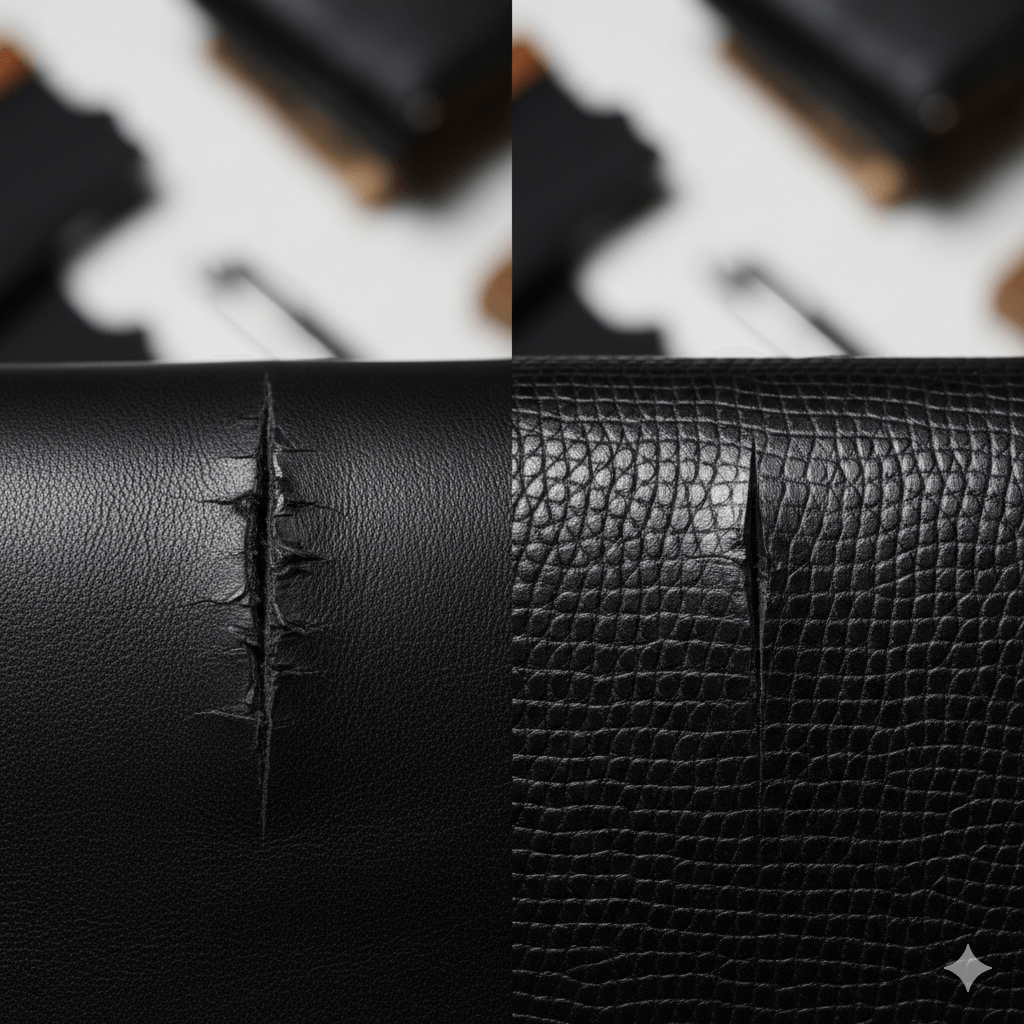
- Buffing techniques are ineffective once the wax layer is breached
- Cracked finishes present restoration challenges
- Texture replication is difficult to achieve invisibly
Modern Restoration Approaches
In 2026, specialized leather technicians use heat-set resin fillers for Saffiano repair. The process involves:
- Cleaning and degreasing the damaged area
- Applying color-matched resin compound
- Heat-setting at controlled temperatures (typically 140–160°F)
- Micro-texturing to approximate crosshatch pattern
Critical limitation: While heat-set resins can visually minimize damage and restore surface protection, industry specialists note that repairs rarely achieve invisible results. Under direct light or close inspection, restored areas typically remain detectable to trained observers.
Cost Considerations
Professional Saffiano repair pricing in 2026 (based on industry averages):
- Minor scuff filling: $80–150
- Deep gouge restoration: $200–400
- Full panel replacement (when available): $600+
By comparison, smooth calfskin corner restoration typically runs $120–200 with often superior visual outcomes according to restoration specialists.
Prevention Strategy: Given repair challenges, protective measures (base shapers, avoiding overstuffing) are particularly important for Saffiano pieces.
Cleaning & Care: Practical Maintenance
Unlike lambskin or untreated calfskin, Saffiano can be maintained with relatively straightforward protocols.
Daily Maintenance
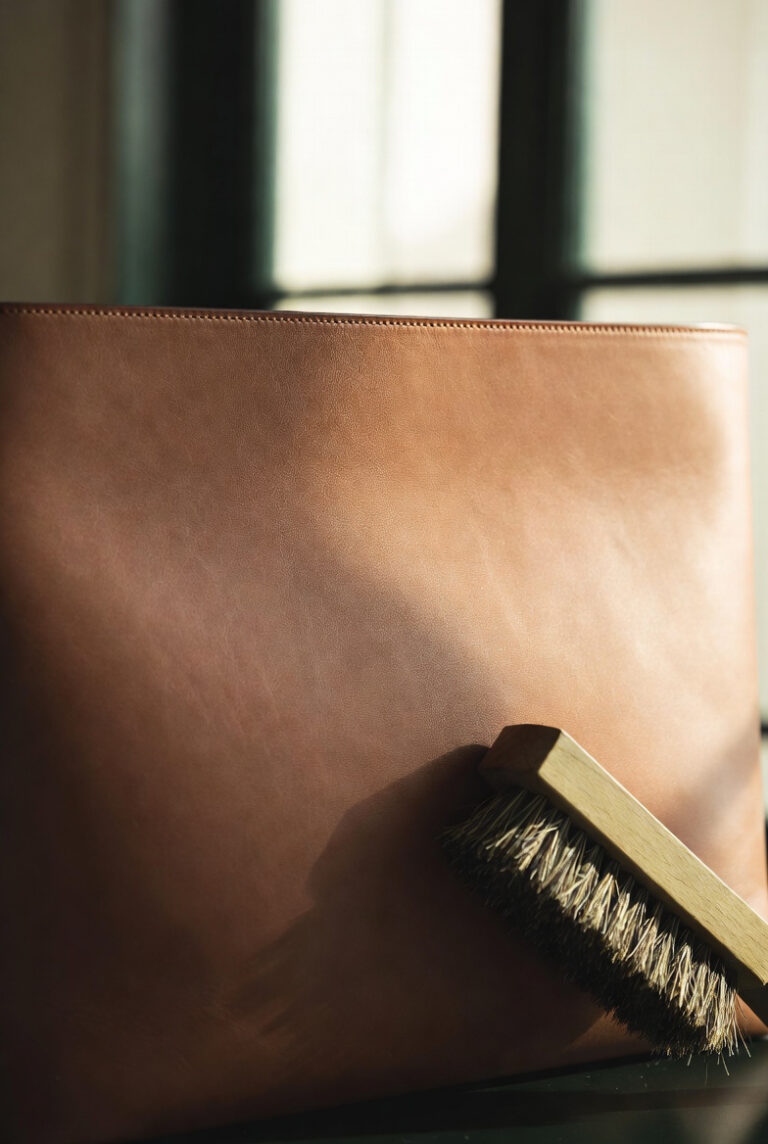
Light cleaning: Use a slightly damp, lint-free microfiber cloth to remove surface dust, salt residue, or light marks. The sealed surface allows for direct contact with minimal absorption risk.
Seasonal conditioning: Apply Saffiano-appropriate conditioner (with wax reinforcement) sparingly—no more than twice annually. Excessive conditioning can cause surface dulling.
Hardware care: Clean metal components separately with appropriate metal polish to prevent oxidation transfer to leather.
Weather resilience: Saffiano’s sealed structure provides superior moisture resistance compared to untreated leathers. Light rain exposure can typically be addressed by immediate wiping without long-term damage—a scenario that often requires professional restoration for delicate leathers like lambskin.
What to Avoid
- Alcohol-based wipes: Can compromise the wax seal over time
- Abrasive cloths: May create micro-scratches that accumulate
- Baby wipes: Often contain moisturizers that leave residue buildup
- Direct sunlight storage: Can cause uneven fading in pigmented finishes
Market Performance & Value Retention (2026 Analysis)
From a resale market perspective, Saffiano demonstrates consistent performance patterns.
Current Market Data
Based on publicly available resale data from major platforms (Rebag, Fashionphile, Vestiaire Collective):
Average resale retention: 68–72% after three years
Primary value driver: Condition stability rather than trend sensitivity
Comparative performance: Market data suggests Saffiano often exceeds lambskin and untreated calf in retention rates for high-use scenarios by 10–15 percentage points
As detailed in our 2026 Luxury Material Guide, Saffiano maintains relatively stable secondary market value partly because it tends to remain in higher condition tiers longer than many other luxury leathers.
Why Saffiano Shows Value Stability
Predictable condition assessment: The sealed surface creates relatively objective condition criteria. Authentication services and resale platforms can grade Saffiano with less subjectivity compared to leathers where patina development affects valuation.
Consistent buyer demand: Market observations suggest that Saffiano pieces in “Good” condition still attract utility-focused buyers, while delicate leathers in similar condition may face reduced buyer pools.
Established manufacturing standards: Prada’s century-long refinement of Saffiano production creates buyer confidence in material consistency.
Volatility Analysis
Saffiano resale prices demonstrate relatively low volatility in secondary markets:
- Narrow deviation from median retention rates
- Minimal color-based price variation (unlike lambskin where color can affect retention by 10–20%)
- Stable demand across market conditions due to practical utility
This positions Saffiano as one of the more predictable luxury materials from a value retention perspective.
Authentication: “Saffiano-Style” vs. Genuine Saffiano
In 2026, various brands market “Saffiano-style” synthetic materials that mimic the crosshatch appearance but differ significantly in composition and resale characteristics.
Identifying Authentic Saffiano
Material composition: Genuine Saffiano is calfskin with applied treatment. Synthetic “Saffiano” uses polyurethane film over fabric or alternative backing.
Flexibility characteristics: Real Saffiano shows natural leather flex with slight resistance. Synthetic materials may crack when bent or show uniform plastic-like behavior.
Edge inspection: Genuine Saffiano shows leather grain structure at cut edges. Synthetic versions reveal fabric weave or solid polymer layers.
Our Sourcing Standard: At Luruge, we curate only Saffiano treatments applied to genuine calfskin from verified wholesale suppliers, ensuring material authenticity and appropriate secondary-market positioning.
Who Saffiano Suits
Saffiano represents a practical rather than sentimental material choice.
Ideal Use Cases
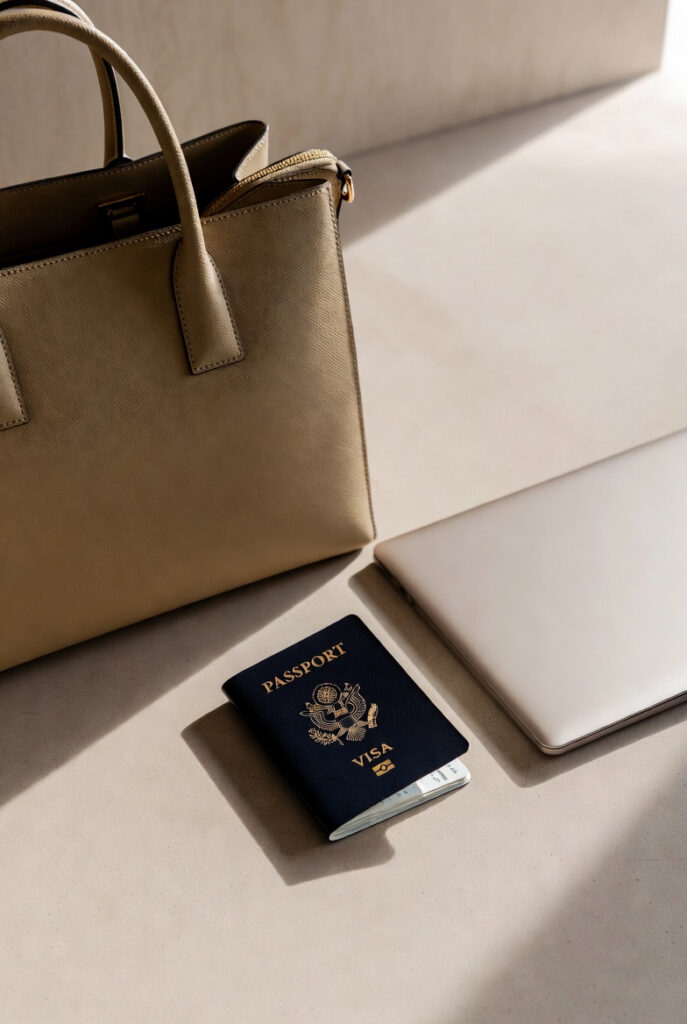
Frequent travelers: Managing climate variability and handling across different environments
Working professionals: Requiring polished appearance with minimal maintenance in high-contact settings
High-frequency users: Prioritizing durability over patina development; preferring single primary bags over rotated collections
Value-conscious buyers: Seeking predictable retention characteristics
Less Aligned With
Artisanal collectors: Seeking handcraft variations and individual character
Patina enthusiasts: Wanting visible aging and evolving surface characteristics
Tactile-focused buyers: Prioritizing soft hand-feel and sensory warmth
Restoration-oriented owners: Comfortable with ongoing professional leather care as part of ownership
Assessment Summary
Strengths
✓ Protective structure — Resists scratches, moisture, and deformation based on material characteristics ✓ Climate adaptability — Performs across temperature and humidity ranges ✓ Stable resale patterns — Demonstrated consistent secondary market performance ✓ Lower maintenance requirements — Straightforward cleaning protocols ✓ Professional utility — Weather-resistant for daily carry
Limitations
✗ Limited patina development — Maintains static appearance over time ✗ Rigid tactility — Firmer hand-feel compared to untreated leathers ✗ Repair challenges — Deep damage difficult to restore invisibly ✗ Minimal character evolution — Doesn’t develop visible use history ✗ Engineered consistency — Lacks artisanal variation
Final Perspective
Saffiano represents a deliberate material choice rather than a compromise.
For buyers who value predictability, protective characteristics, and stable resale patterns, it remains one of the most practical materials in contemporary luxury goods. It delivers measurable performance: protective resilience and market consistency.
For those seeking emotional connection through material transformation, Saffiano will feel incomplete. It doesn’t visibly age, doesn’t dramatically soften, and doesn’t develop pronounced character.
But it maintains its characteristics reliably.
The relevant question is not whether Saffiano is objectively “superior”—it’s whether Saffiano aligns with your ownership priorities and usage patterns.
At Luruge, we curate Saffiano pieces for buyers who understand this distinction and whose lifestyle aligns with the material’s protective characteristics.
Continue Your Research
→ Return to The 2026 Luxury Material Guide
→ Browse Our Curated Collection
→ Material Care Resources
About This Analysis
The Luruge Editorial Team creates luxury material educational content through comprehensive industry research, resale market data analysis, and material science consultation. This guide synthesizes information from leather industry publications, restoration specialist insights, and secondary market reports. Updated February 2026.
Curator’s Note on Material Assessment
At Luruge, we source exclusively from BrandsGateway, a verified wholesale luxury distributor with direct brand relationships. While we evaluate materials based on supplier specifications, industry research, and market data, we do not perform independent laboratory testing or materials analysis. We recommend buyers conduct their own research and consider professional authentication for high-value purchases.
Material performance varies based on individual use patterns, climate conditions, and care practices. The information in this guide is educational and should not be considered as guarantees of specific outcomes.
Research sources: Leather science publications, Rebag/Fashionphile market data 2023-2025, leather restoration industry specialists, manufacturer specifications
Post Tags: #Leather Care Guide #Luxury Material Analysis #Prada Saffiano #Resale Value Insights #Saffiano Leather Education